The Flemish School Laethem-Saint-Martin, 1890-1940
08.01.55 – 30.01.55
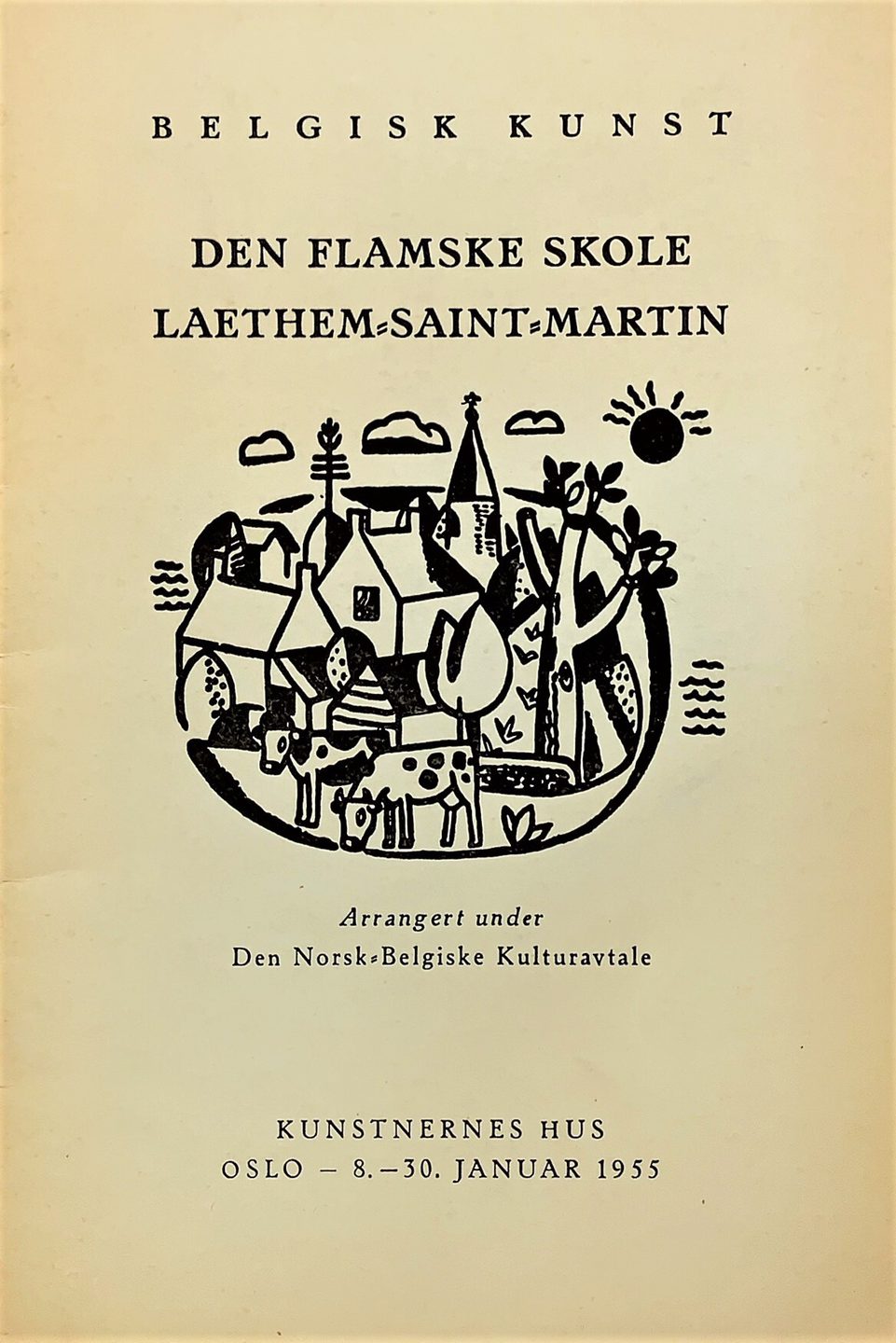
The exhibition is organized by the Belgian Ministry of Education and the Ministry of Foreign Affairs' Office for Cultural Exchange with Abroad as part of the cultural cooperation between Belgium and Norway. The organizers thank the Board of Fine Arts for their kind assistance.
Catalog text
Throughout the 19th century, the Belgian school of painting followed the same development as the French school. After Neoclassicism, Romanticism, Realism and Impressionism, it left the line continued by the Fauvists and Cubists to move to Expressionism. Was it to join Central Europe where this art direction was then the strongest? Hardly, because Flemish Expressionism was quite independent - and in our opinion also quite significant.
Its history is linked to two groups of artists, two generations of painters who worked in Laethem-Saint-Martin on the River Lys, above Ghent. The first group reacted against Emilie Claus' impressionism and gave consciousness priority over the optical. The other group appears as the real expressionists. This group understood how to unite the plastic with the lyrical.First an atmosphere was created and then a style was created. Laethem-Saint-martin became, in a way, the Pont-Aven of the Flemish school.