DESERT PHOSfate
By Mohamed Sleiman Labat
Saturday 22.08.26
Saturday 22.08.26
Fotogalleriet and Kunstnernes Hus Cinema invite you to a screening of DESERT PHOSfate (2023, 58 min) by Sahrawi artist and filmmaker Mohamed Sleiman Labat, followed by a conversation between Labat and Crystal Bennes.
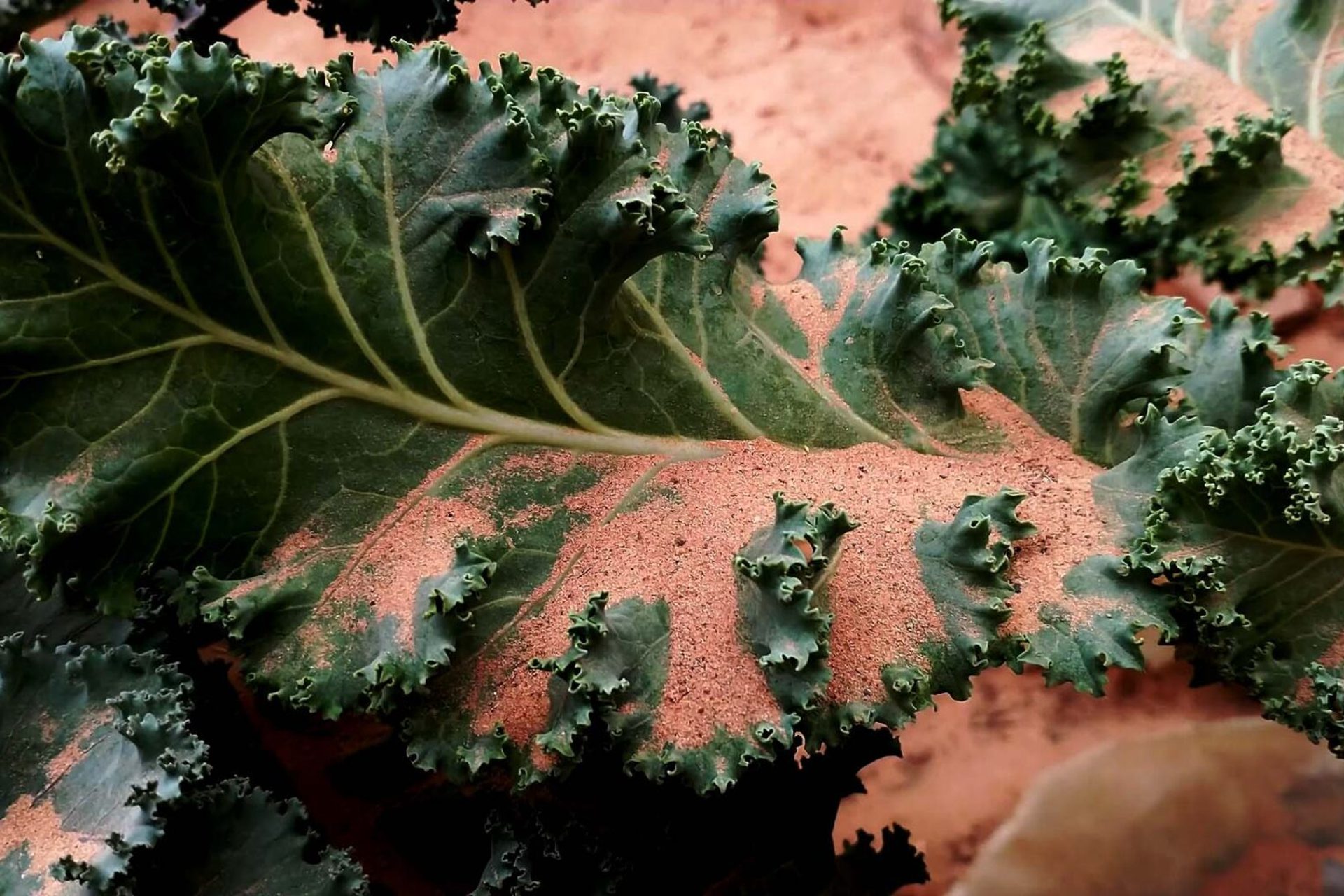
Shot in the Sahrawi refugee camps in the Hamada desert of southwestern Algeria, the film takes its title from the fusion of "phosphate" and "fate." Across three chapters it weaves through the story of the mineral — in high demand as fertiliser, devastating in its extraction — moving between land, sand particles, plants, and the displacement of both people and minerals. Alongside this runs the emergence of family gardens in the camps, and the knowledge of how to farm the desert without the processed phosphorus whose extraction displaced the Sahrawi from Western Sahara.
The screening is part of the public programme for The Island, the Mine, and the Resistance Gardens by Crystal Bennes with Mohamed Sleiman Labat at Fotogalleriet — a chapter in We Eat the Earth, an ongoing research project tracing phosphate fertiliser as material and political agent across Sweden, Western Sahara and Algeria.
About the film
DESERT PHOSfate (2023, 58 min) is an experimental documentary by Sahrawi artist Mohamed Sleiman Labat. It weaves through the story of phosphate, exploring connections between land, sand particles, plants, human, and mineral displacement. Through realities, metaphors, and poetics rooted in the desert, it highlights connections between ecological justice, colonial practices, environmental violence, traces of anthropocentric mineral extraction, and the loss of indigenous ways of knowing and telling about the world.
Told from the perspective of a Sahrawi artist, the film doesn’t attempt to follow conventional Western cinematic methods or structures. Instead, it draws on narratives and philosophies rooted in the Sahrawi way of living. It foregrounds indigenous ways of telling stories through metaphors, dream telling, and fables. Such poetic and nonlinear methods from the Sahrawi perspective can offer another way of narrating the Sahrawi experience.
DESERT PHOSfate is a poetic rhyming combination of phosphate and fate, referring to the fate, destiny and the current and future impact of phosphate on the Sahrawi community, global economies, and ecosystems.
The film consists of five chapters of different lengths and points of view. They do not follow a logical or chronological order but connect and reconnect in unexpected ways. This nonlinear structure is the artist’s method of decolonizing narration. By incorporating elements from his surroundings and lived context, he grounds the work in his own experience. The chapters’ inconsistency resembles the rhythms of a sandstorm; they build up and collapse several times, roar loudly again before winding down to a deathly silence and returning to the roar. This rhythm sets the tone for the entire film.
Artist bios
Mohamed Sleiman Labat is a Sahrawi multidisciplinary artist, filmmaker, and writer. Born and raised in the Sahrawi refugee camps in southwest Algeria, he runs Motif Art Studio, a small art space built entirely from discarded materials. His art draws upon the past and present life of the Sahrawi people through films, writing, and community-based work. His practice is centered around decoloniality and indigeneity through revisiting nomadic oral knowledge, desert elements, foodways, and collective self-determination. His films weave together narratives of sand, plants, humans, and mineral displacement. He collaborates with agricultural engineers, oral knowledge holders, storytellers, researchers, and tent makers to allow multiple contributors to be part of the multi-layered interpretations of his interventions. His work has been exhibited at the Helsinki Biennial 2023 (Finland), CultureScapes 2023 (Switzerland), the Luleå Biennial 2024 (Sweden), CAAM (USA), the V&A Museum Dundee (Scotland), and the Grand Musée de l'Afrique (Algeria).
Crystal Bennes is a visual artist and writer based in Scotland. Her practice critically examines the different ways in which power—whether political, financial, technological—is expressed in the world. This work is grounded in extensive research, field work and archival histories, and is expressed in a wide range of media including Jacquard tapestries, soap sculptures, photographs, publications, performance lectures, prints and meadows. Recent exhibitions include: When Computers Were Women, British Textile Biennial (2025); Klara and the Bomb (2025), NOUA, Norway; Betwixt (2024), Freelands Gallery, London; Platform (2023), Edinburgh Art Festival; and Flora Italica (2023), Thorvaldsens Museum, Copenhagen. Between 2022 and 2024, she was artist-in-residence at Talbot Rice Gallery and the Edinburgh College of Art as Freelands Foundation Fellow, and in 2025 she was Dwell Here artist in residence at IMMA.
Title
DESERT PHOSfate
Directed by
Mohamed Sleiman Labat
Country
Algeria / Western Sahara / Finland
Year
2023
Languages
Hassaniya, Arabic, English
Subtitles
English
Duration
58min + 45min conversation