
Shuruq Harb
Interrupted Futures
06.03.26 – 03.05.26
06.03.26 – 03.05.26
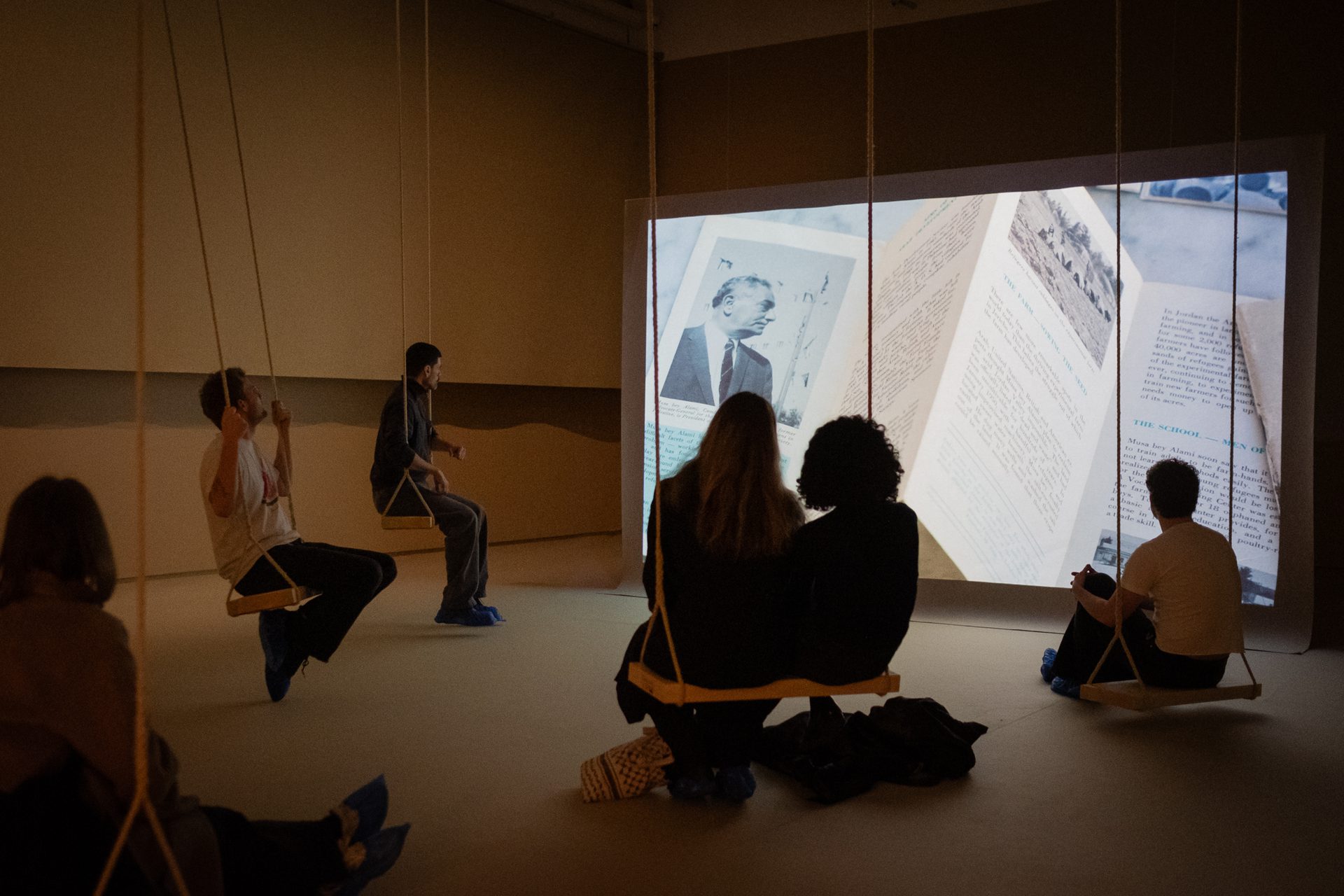
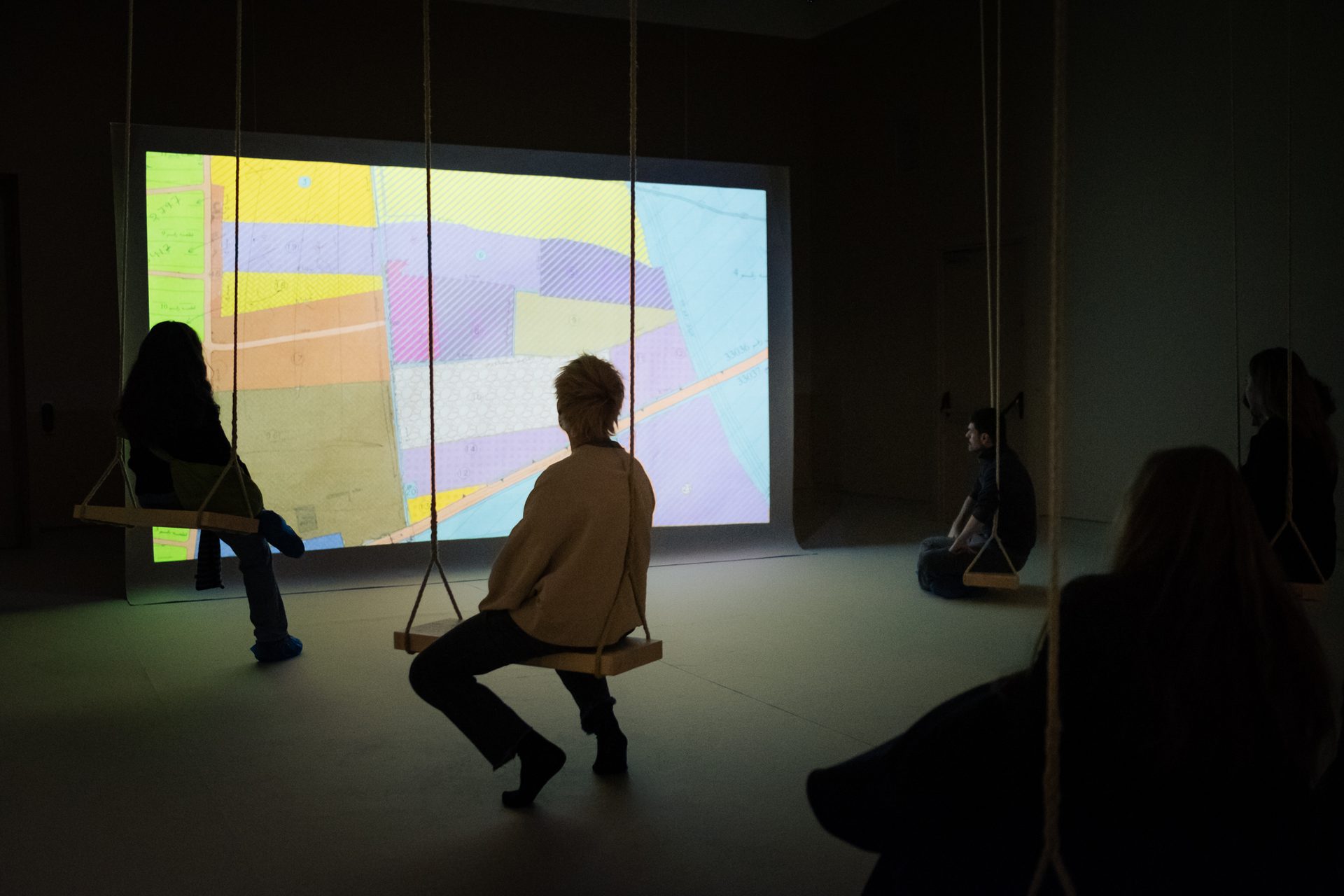
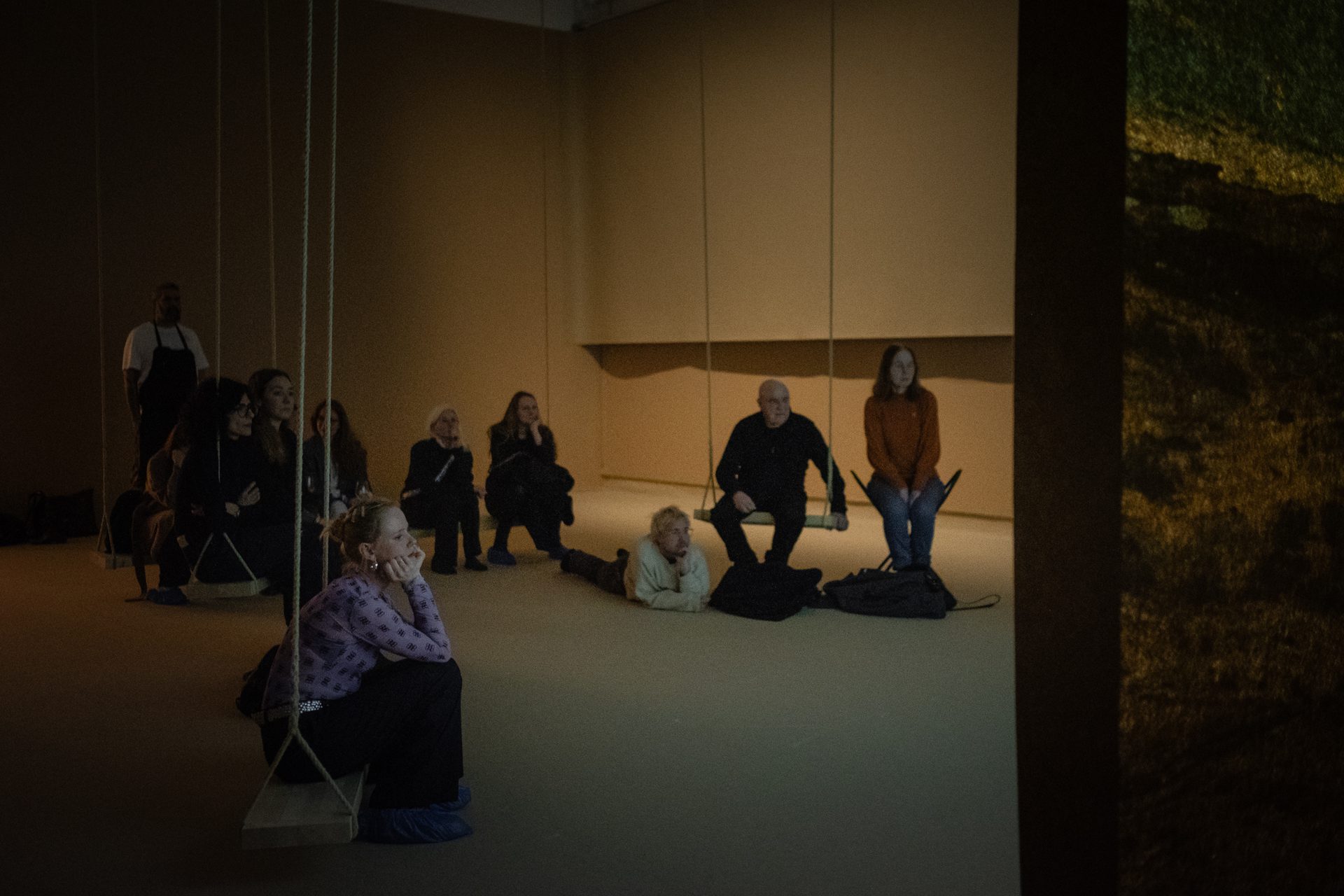
Interrupted Futures is an installation by Ramallah-based artist Shuruq Harb. Centered on the film Al-Mashrou’, the work brings a site in Palestine into dialogue with the local context of Oslo. Earth-toned surfaces reference the palette of Palestine, while swings suspended from the ceiling destabilize the viewer’s physical and perceptual vantage point.
About the exhibition
Developed by Shuruq Harb in collaboration with architectural historian Nadi Abusaada, the film Al-Mashrou’ weaves together archival material with footage filmed over the past two years at the Arab Development Society (ADS), a Palestinian agricultural initiative in the Jordan Valley.
Founded in the 1930s by Jerusalemite intellectual Musa Alami, the ADS was envisioned as an agricultural initiative rooted in principles of self-sufficiency. Following the 1948 Nakba and the establishment of Israel, its scope expanded to include housing, livelihoods, and education for Palestinian orphaned refugees.
Harb offers a meditative reflection on the inherent paradox of the ADS, and by extension the wider context of Palestine: how aspirations for self-determination have been shaped—and constrained—by imported European models of farming and architecture, as well as by deep power asymmetries and a reliance on foreign aid. Together, these forces have limited the imagination of what Palestinian autonomy looks like.
Al-Mashrou’, meaning “the project,” is the colloquial name for the ADS. While “project” is a familiar term for contemporary artworks, the term also denotes many kinds of proposals and initiatives still in formation, not yet complete. The title deliberately blurs the line between the agricultural initiative, the film itself, and Palestine as an ongoing, unfinished project.
The ADS estate has undergone multiple transformations over the decades, mirroring the region’s defining conflicts and the successive erosion of Palestinian autonomy. A decisive rupture occurred with the signing of the Oslo Accords in the mid-1990s, which fragmented the site into zones of differing jurisdiction, obstructed free movement, and severely restricted access to one of its most vital resources: water.
In Palestine, “Oslo” does not primarily signify a city, but an agreement whose consequences are inscribed onto the land. Conceived across both Palestine and Norway, Interrupted Futures reflects on self-sufficiency, resilience, and the struggle for Palestinian autonomy in the post-Oslo era—connecting landscapes far from one another within a horizon of interrelated futures, continually reshaped, deferred, and interrupted.
Shuruq Harb in conversation with Sarah Lookofsky
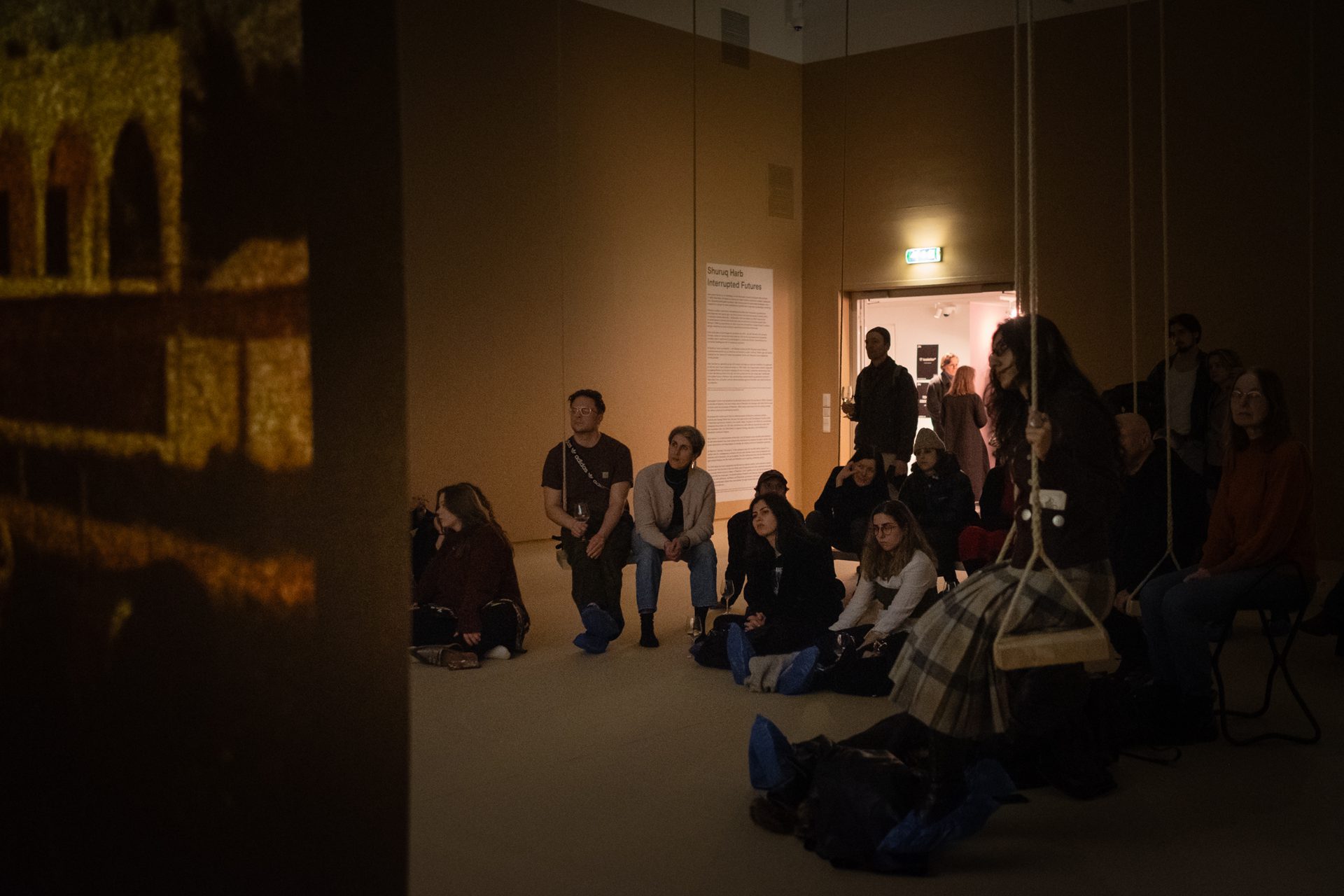
Photo: Mathilde Velvin 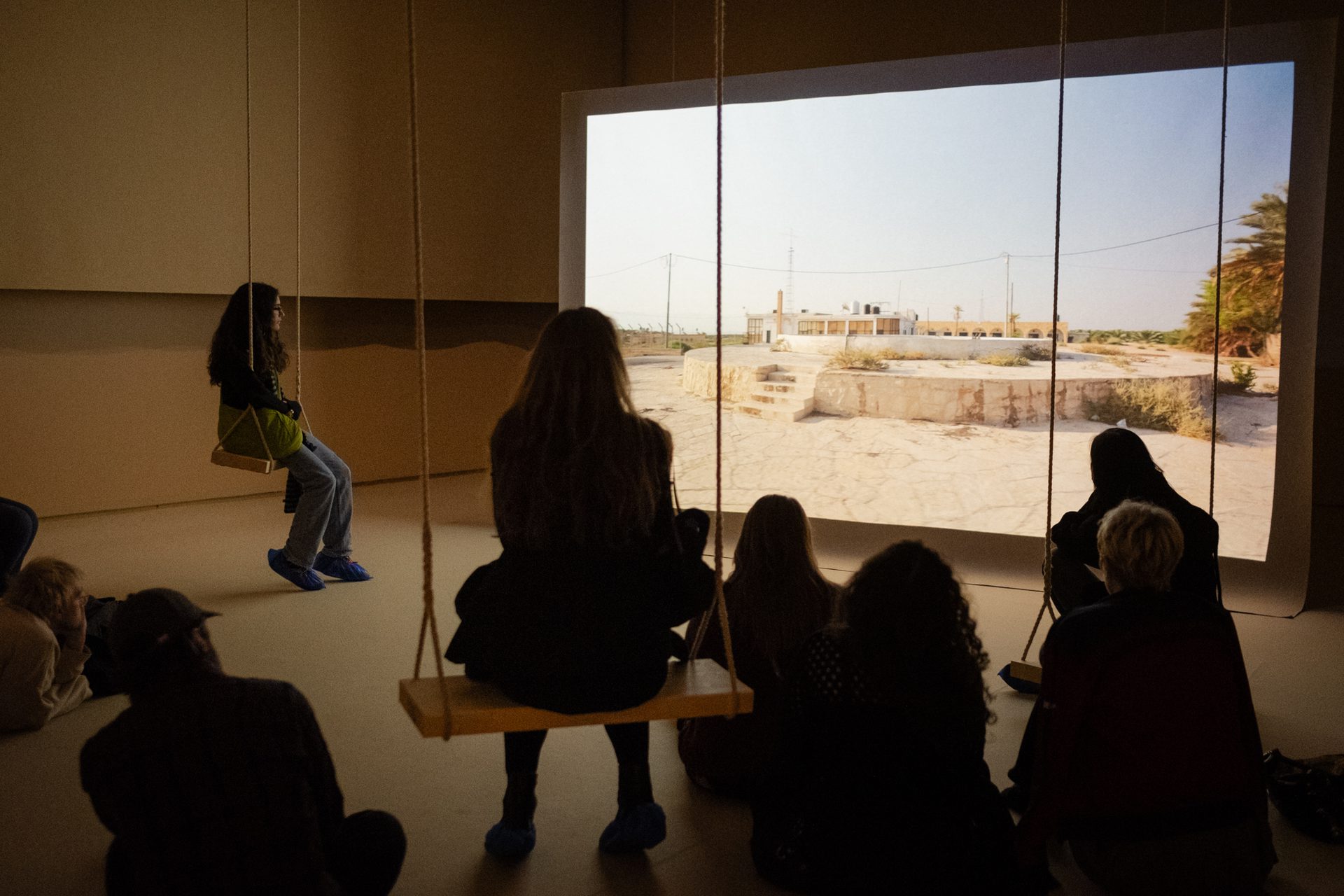
About the artist
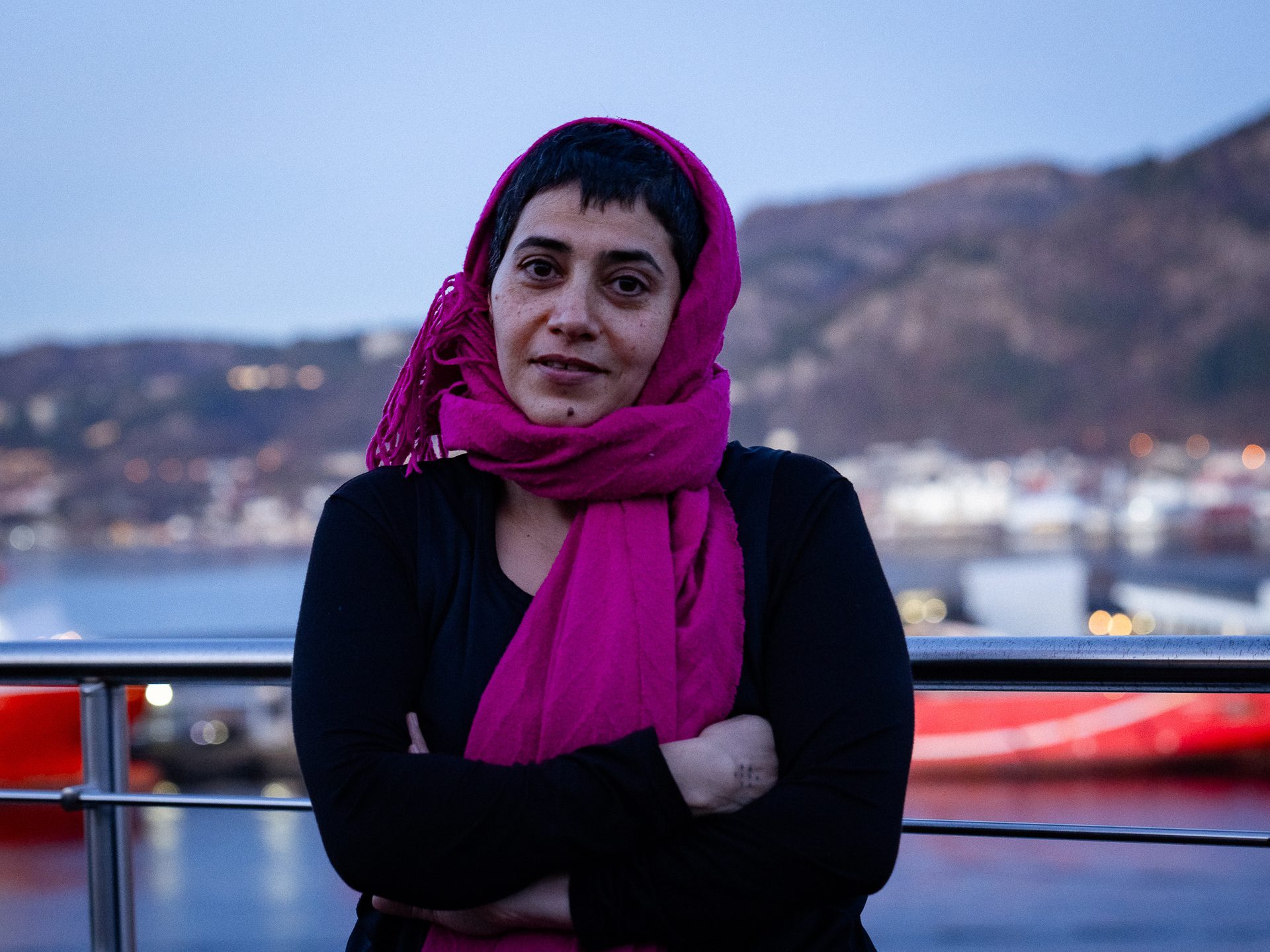
Shuruq Harb (b. 1980) is an artist, filmmaker and writer based in Ramallah. Her work has been shown internationally in various institutions and festivals. Her film The White Elephant received the award for best short film at the Cinema du Reel Festival in Paris (2018), and was shortlisted for the Hamburg International Short Film Festival (2019). She was the winner of the Fundació Antoni Tàpies Video Art Production Grant of the Han Nefkens Foundation in 2019. Harb is also the producer of Al Mashrou’ (2024).
Supported by
The film was commissioned by Kunstnernes Hus and co-produced with Bergen Center for Electronic Art (through their Off-Centred residency program), with support from FilmLab-Palestine and Etxe Betea’s A Shelter of One’s Own residency. Funding and support was provided by Wijhat: Culture Resource (Al-Mawred Al-Thaqafy), Kulturrådet and the Nordic Culture Fund. The exhibition is supported by the Fritt Ord Foundation and The Savings Bank Foundation DNB.

Team
Accessibility
See also