My Father's Shadow
Av Akinola Davies Jr.
26.04.26 – 06.05.26
26.04.26 – 06.05.26
An absent father appears and takes his two young sons on a day trip through Lagos — on the day in 1993 when Nigeria's first democratic election since the military coup is annulled. Akinola Davies Jr.'s award-winning feature debut moves between the magical-realist and the sensory. It is a deeply personal film about childhood, memory, and what remains unspoken between parents and children.
About the film
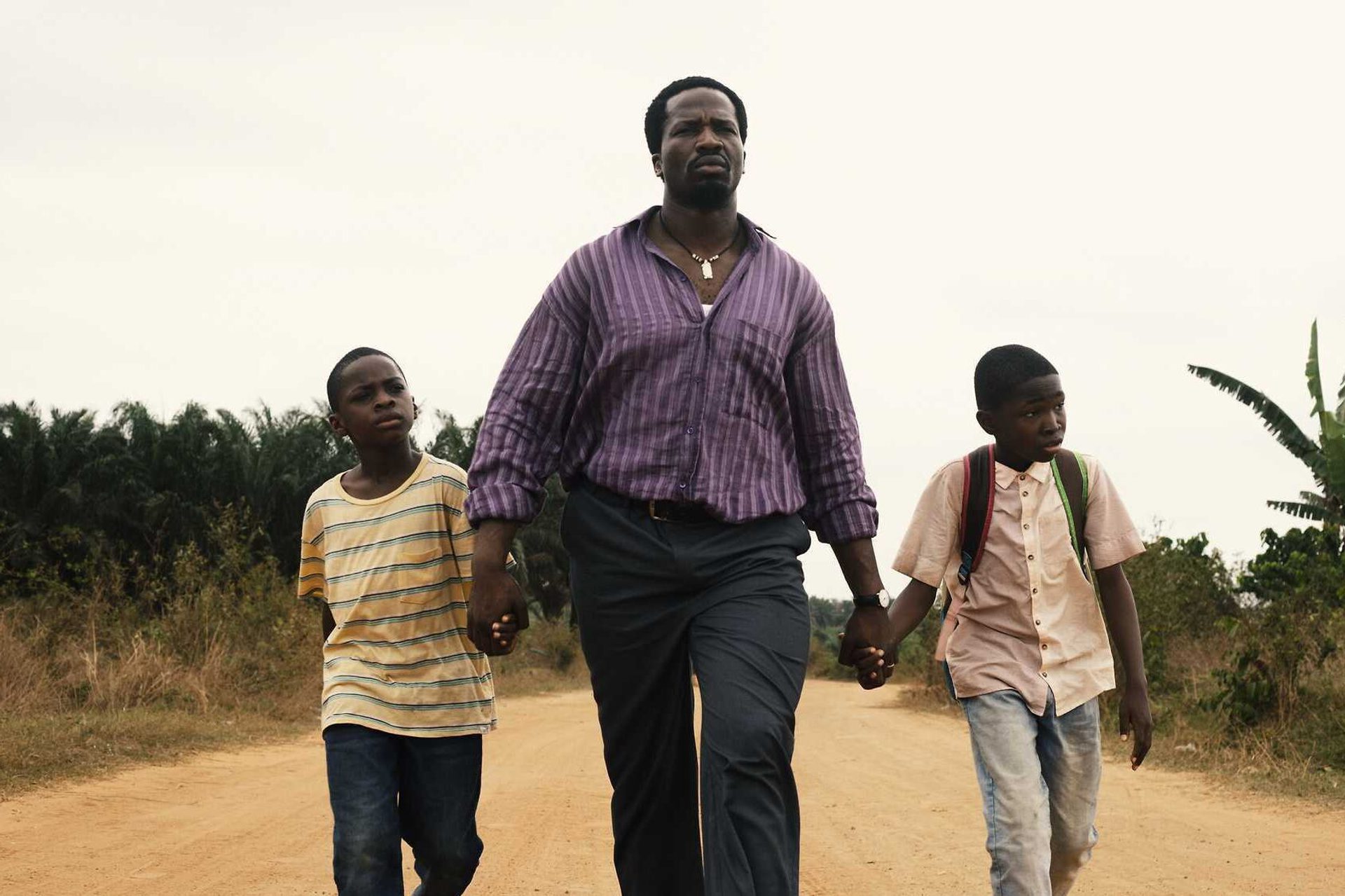
Lagos, 12 June 1993. Brothers Akin and Remi are playing outside their home in the countryside when their father Folarin (Sopé Dìrísù), rarely present in their lives, unexpectedly appears. He takes them along into the city to collect overdue wages, and what follows is a rare day together — through busy streets, markets, beaches and nighttime drives — as the political unrest in the country gradually escalates around them.
The film is semi-autobiographical: director Akinola Davies Jr. and his brother and co-writer Wale Davies lost their father when they were very young. My Father's Shadow gives shape to memories that may never have taken place — as much an imagining of what could have been as a retelling of what was. Through Jermaine Edwards' intimate, naturalistic cinematography and Omar Guzmán Castro's elliptical editing, we see Lagos through a child's eyes: sensory and fragmented, charged with fascination and unease. Sopé Dìrísù gives the father a quiet, magnetic presence that shifts between myth and vulnerability — a figure seen from below, admired and incomprehensible in equal measure.
The film had its world premiere in Un Certain Regard at the 2025 Cannes Film Festival, as the first Nigerian film in the festival's Official Selection, and received the Caméra d'Or Special Mention. It has since won the BAFTA for Outstanding Debut and the BIFA for Best Director.
Title
My Father's Shadow
Directed by
Akinola Davies Jr.
Country
Nigeria, United Kingdom, Ireland
Year
2025
Languages
English, Yoruba
Subtitles
English
Duration
1h 34min